top of page
Hands On Technology Builds
This project highlights my experiences exploring hands-on technology through tin foil circuits and 3D printing. For the circuit activity, I used aluminum foil, an LED light, and a battery to create a working electrical circuit. One of the biggest challenges was troubleshooting the circuit and finding a larger battery that would successfully power the LED. For the 3D printing activity, I designed a functional phone stand with an opening for a charging cord, which required me to consider measurements, stability, and the overall design.
Both activities gave me the opportunity to experiment with unfamiliar technologies, solve problems, and make adjustments along the way. As a sixth-grade social studies teacher, these projects helped me recognize how hands-on learning can encourage creativity, critical thinking, and problem-solving. They also showed me how makerspace activities could be adapted to help students design historical models, create artifacts, and demonstrate their understanding in ways that go beyond traditional classroom assignments.

01
Hands On Technology Builds

01
3D Project
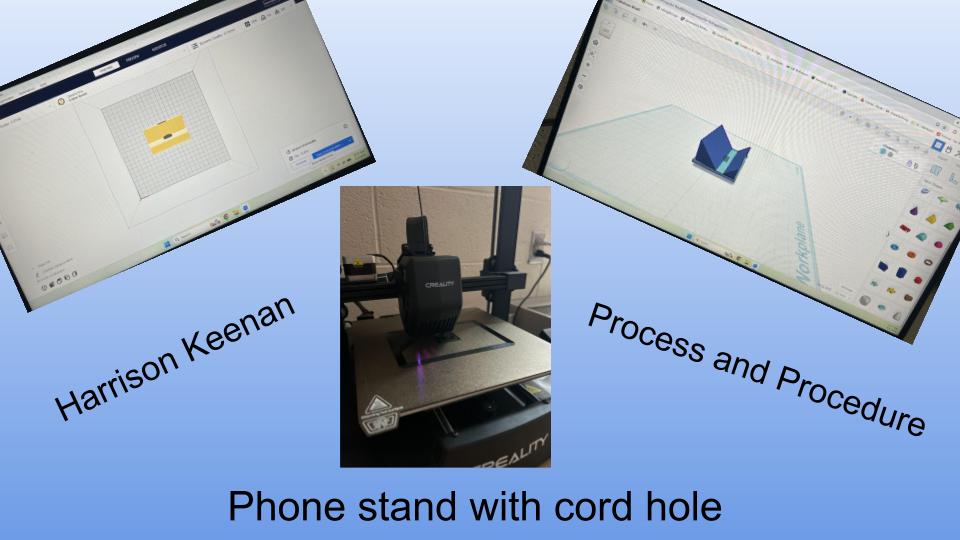
For this assignment, I designed and created a 3D-printed phone stand that included a hole at the bottom for a charging cord. My goal was to create something practical that I could use in everyday life while learning more about the 3D design and printing process.
I started by using Tinkercad to design the phone stand. I had to consider the size, angle, and stability of the stand to make sure it could support a phone properly. One feature I wanted to include was a hole near the bottom that would allow a charging cord to pass through while the phone was sitting on the stand. This required me to think about the placement and size of the opening so the cord would fit without interfering with the phone.
Once I was satisfied with the design, I prepared the model for 3D printing. This involved exporting the design, using slicing software to prepare the print, and considering how the printer would build the stand layer by layer. The printing process also helped me understand the importance of measurements and how small design decisions can affect the final product.
One of the biggest challenges was making sure the stand was functional rather than just visually appealing. I needed to consider whether the phone would sit securely and whether the charging cord could easily fit through the opening. This assignment showed me how important planning, testing, and making adjustments can be when creating something from scratch.
Overall, this project gave me a better understanding of 3D modeling and printing while allowing me to create something useful. As a sixth-grade social studies teacher, I could see students using this technology to design historical structures, geographical models, or artifacts connected to classroom lessons. It reinforced the idea that makerspace activities can encourage creativity, problem-solving, and hands-on learning while producing something meaningful.

02
Circuits (1)
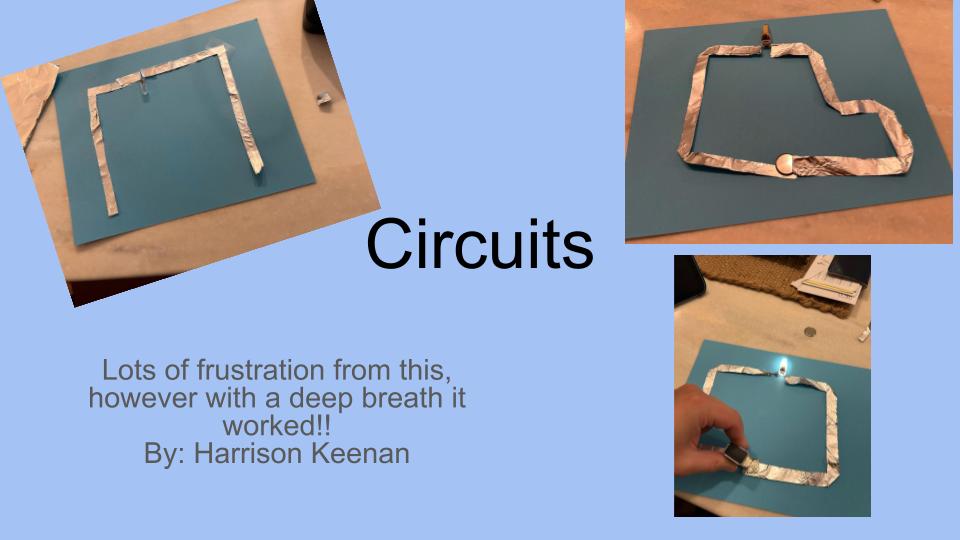
For this assignment, I explored how electrical circuits work by creating a simple circuit using aluminum foil, a battery, and an LED light. The goal was to create a working circuit using everyday materials while learning about electricity and how different components work together. I used strips of aluminum foil as conductors to connect the battery to the LED and complete the circuit.
One of the biggest challenges I faced was getting the LED light to turn on. At first, I had trouble figuring out why the circuit was not working, even though everything appeared to be connected correctly. After experimenting with the connections and checking the placement of the materials, I realized that I needed a bigger battery to provide enough power for the light. Finding a larger battery and figuring out how to incorporate it into my circuit took additional time and effort. Once I made the necessary adjustments, I was able to better understand how the power source and connections affect whether a circuit works properly.
This assignment was a good reminder that hands-on projects do not always go as planned. Something that seemed relatively simple ended up requiring more troubleshooting than I originally expected. As a sixth-grade social studies teacher, I could see how activities like this could help students develop problem-solving skills and learn through trial and error. Overall, this project helped me better understand basic circuits and reinforced the importance of patience, experimentation, and being willing to make adjustments when something does not work the first time.
bottom of page